



Parliament Passes New Law for Registration of Deeni Madaris
Published On 24 Feb, 2026
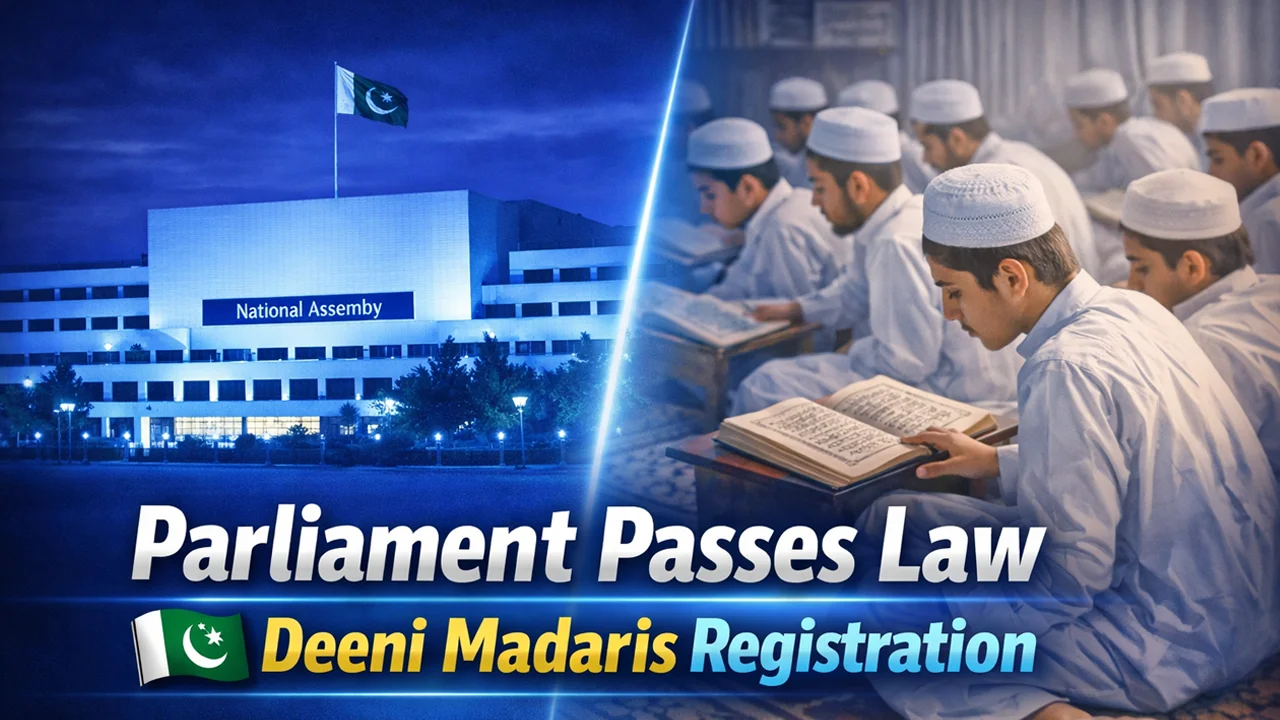
National Assembly Passes Societies Registration (Amendment) Act 2024
What Is This Bill About?
Pakistan’s National Assembly has approved the Societies Registration (Amendment) Act 2024, introducing new rules for the registration and regulation of Deeni Madaris (religious seminaries) across the country.
The law aims to bring religious institutions under a clear legal system while ensuring transparency and accountability.
What Changes Under the New Law?
✅ 1. Mandatory Registration of Madaris
All Deeni Madaris must now be officially registered:
-
Existing madaris → must register within 6 months
-
New madaris → must register within 1 year of establishment
A madrasa with multiple campuses will require only one registration.
✅ 2. Annual Reports & Financial Audit
Madaris will now:
-
Submit yearly reports of educational activities
-
Conduct audits of accounts and submit audit reports to authorities
✅ 3. Ban on Hate or Extremist Material
The law clearly states that madaris cannot teach or publish material promoting militancy, sectarianism, or religious hatred.
✅ 4. Inclusion of Modern Subjects
Madaris are encouraged to gradually include basic contemporary subjects along with religious education.
✅ 5. Single Legal Registration System
Once registered under this Act, a madrasa will not need registration under multiple laws, simplifying regulation.
Why Was This Law Introduced?
According to the Statement of Objects and Reasons , Deeni Madaris play an important role in religious education, but proper legislation was needed to regulate and monitor their activities through an official legal framework.
Why This Matters for Youth
-
Promotes transparency in religious education
-
Encourages modern education alongside religious studies
-
Helps prevent extremism and misinformation
-
Creates a standardized education environment
Pakistan has made registration compulsory for all Deeni Madaris.
Madaris must submit annual reports, audits, and avoid extremist content.
The law aims to regulate religious education while encouraging modern subjects.