


Dr. Atta-ur-Rahman
Published On 07 Nov, 2026
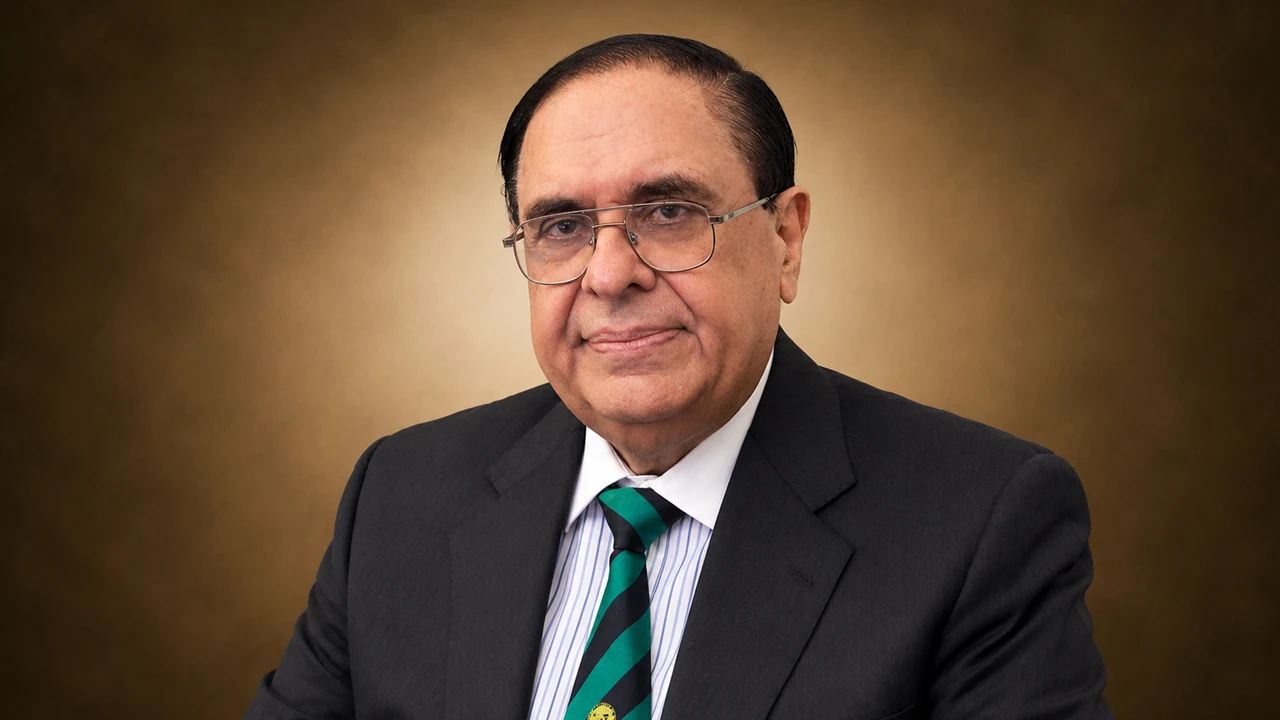
Dr. Atta-ur-Rahman (born 22 September 1942) is a renowned Pakistani organic chemist, academic and science policy leader, internationally recognized for his research in natural product chemistry and his contributions to the development of higher education and scientific research in Pakistan. Born in Delhi, British India, he later moved to Pakistan and completed his early university education at the University of Karachi. He earned his PhD in organic chemistry from the University of Cambridge in 1968 and went on to become a Fellow of the Royal Society of London. He has played major roles in strengthening Pakistan's research institutions, leading the Higher Education Commission and promoting scientific cooperation among developing countries.
SCIENTIFIC PAKISTANI | THE LEADERSHIP ARCHIVES
The Architect of Scientific Progress: How Atta-ur-Rahman Transformed Pakistan's Research and Higher Education
A Tribute to the Pakistani Chemist Who Connected Scientific Discovery with National Development
The Scientific Breakthrough: Exploring the Chemistry of Nature
At the heart of modern chemistry lies the study of natural compounds and their potential to improve human health. Plants, microorganisms and other natural sources contain complex chemical substances that can provide important starting points for the development of medicines and new scientific applications.
Dr. Atta-ur-Rahman made significant contributions to this field through his research in organic chemistry, particularly natural product chemistry. His work has focused on identifying, studying and synthesizing biologically active compounds found in nature.
The Research Focus: One important area of his research involved alkaloids obtained from the rosy periwinkle plant (Catharanthus roseus). This plant is known for producing compounds with important medicinal applications, including substances used in cancer treatment. Rahman's work included the synthesis of complex natural compounds and the investigation of their chemical structures.
The Scientific Method: His research has also involved advanced analytical techniques, including circular dichroism and nuclear magnetic resonance (NMR) spectroscopy. These methods help scientists understand the structures and properties of complex organic molecules.
The Global Contribution: Through his research, academic publications and editorial work, he has helped advance natural product chemistry and strengthen scientific collaboration between researchers in Pakistan and international institutions.
Building a Scientific Foundation: The H.E.J. Research Institute
Dr. Atta-ur-Rahman's contribution to science extends beyond his individual research. He played a major role in developing research institutions that could support generations of Pakistani scientists.
One of the most important parts of this work was his association with the Hussain Ebrahim Jamal (H.E.J.) Research Institute of Chemistry at the University of Karachi.
Institutional Development: He joined the institute's leadership as co-director in 1977 and became its director in 1990. Under his leadership, the institute developed into an internationally recognized centre for research in organic, bio-organic and natural product chemistry.
International Research: The institute helped create opportunities for Pakistani researchers to work with advanced laboratory facilities, participate in international scientific projects and publish research in leading academic journals.
A Broader Vision: The institute later became part of the International Center for Chemical and Biological Sciences (ICCBS), which brought together major research facilities and academic programmes in chemical and biological sciences. Rahman has continued to be associated with the centre as a professor emeritus and patron-in-chief.
Transforming Higher Education: The Establishment of HEC
One of Dr. Atta-ur-Rahman's most influential contributions to Pakistan came through his leadership in higher education and science policy.
In 2002, Pakistan established the Higher Education Commission (HEC), replacing the University Grants Commission. Rahman became its founding chairman and led the organization until 2008.
University Development: During his tenure, the HEC focused on improving university standards, expanding access to higher education and strengthening academic institutions across the country.
Research Opportunities: Initiatives included support for research funding, scholarships, faculty development, laboratories and international academic collaboration.
Digital Education: The development of digital libraries and access to international research journals helped universities and scholars connect with global academic resources.
International Collaboration: Scholarship and research programmes created opportunities for Pakistani students and academics to study, train and collaborate with institutions abroad.
His period as HEC chairman became an important chapter in Pakistan's higher education policy. The reforms and expansion of research capacity during those years continue to be discussed in debates about the country's university system and scientific development.
Science Beyond Borders: COMSTECH and International Cooperation
Dr. Rahman's vision for scientific development extended beyond Pakistan. He believed that developing countries could make greater progress by sharing research facilities, academic knowledge and technological expertise.
From 1996 to 2012, he served as Coordinator General of the Committee on Scientific and Technological Cooperation (COMSTECH), an organization of the Organisation of Islamic Cooperation (OIC).
Scientific Partnerships: Through COMSTECH, he supported cooperation among scientists and universities across OIC member states.
Research and Training: His work promoted scientific conferences, research collaboration, academic exchanges and opportunities for young researchers.
International Networks: He has also been associated with the Network of Academies of Sciences in Islamic Countries (NASIC), serving as its president and supporting cooperation among national science academies.
These activities reflected his wider belief that scientific progress should be a shared opportunity rather than a privilege limited to wealthy countries.
Global Recognition: Awards and Scientific Achievements
Dr. Atta-ur-Rahman's research and contributions to scientific development have earned recognition from leading academic institutions and governments around the world.
Some of his major honours include:
- UNESCO Science Prize (1999): Recognized his contributions to scientific research and development.
- Nishan-i-Imtiaz (2002): Pakistan's highest civilian award, presented in recognition of his services.
- Fellow of the Royal Society (2006): Elected to one of the world's oldest and most respected scientific academies.
- TWAS Prize for Institution Building (2009): Recognized his role in strengthening scientific institutions.
- Austria's Grand Decoration of Honour in Gold with Sash (2007): An international recognition of his contributions.
- China International Science and Technology Cooperation Award (2020): Presented by the President of China for his contributions to scientific collaboration and research.
- Multiple National Civil Awards: He has also received Tamgha-i-Imtiaz, Sitara-i-Imtiaz and Hilal-i-Imtiaz.
High-Impact Bibliography: Research, Books and Publications
For students and researchers interested in organic chemistry, natural products and scientific research, Dr. Atta-ur-Rahman's academic publications provide an extensive body of work.
Some notable books and research contributions include:
- "Stereoselective Synthesis in Organic Chemistry": A major academic work exploring methods used to create molecules with specific three-dimensional structures.
- "NMR Spectroscopy: Basic Principles": An educational text explaining the fundamentals of nuclear magnetic resonance spectroscopy, an important technique for identifying molecular structures.
- "Studies in Natural Product Chemistry": A major scientific book series published under his editorship, covering research on natural compounds and their chemical and biological properties.
- Research on Natural Product Synthesis: His scientific papers have examined the synthesis of biologically active natural compounds, including alkaloids and other complex organic molecules.
His official academic profile and institutional records document an extensive publication record, including research papers, books, book chapters and international patents.
A Message to the Youth: Building a Knowledge-Based Pakistan
Dr. Atta-ur-Rahman's journey demonstrates that scientific progress requires more than individual talent. It depends on strong universities, well-equipped laboratories, committed teachers and opportunities for young researchers to turn ideas into discoveries.
For students in Faisalabad, Lahore, Karachi, Islamabad, Peshawar and across Pakistan, his career offers an important lesson: education and research can become powerful tools for national development.
The future of Pakistan's scientific progress will depend on young people who are willing to explore chemistry, medicine, biotechnology, artificial intelligence, renewable energy and other emerging fields. They need opportunities to learn, experiment, question existing ideas and work with researchers around the world.
A country's scientific strength is not measured only by the number of degrees its students earn. It is also reflected in the quality of its research, the strength of its institutions and the opportunities it creates for future generations.
Dr. Atta-ur-Rahman's legacy is a story of scientific discovery, institution-building and international cooperation. His career reminds Pakistan that investing in education and research is an investment in the country's future.