


Dr. Abdul Qadeer Khan
Published On 07 Nov, 2026
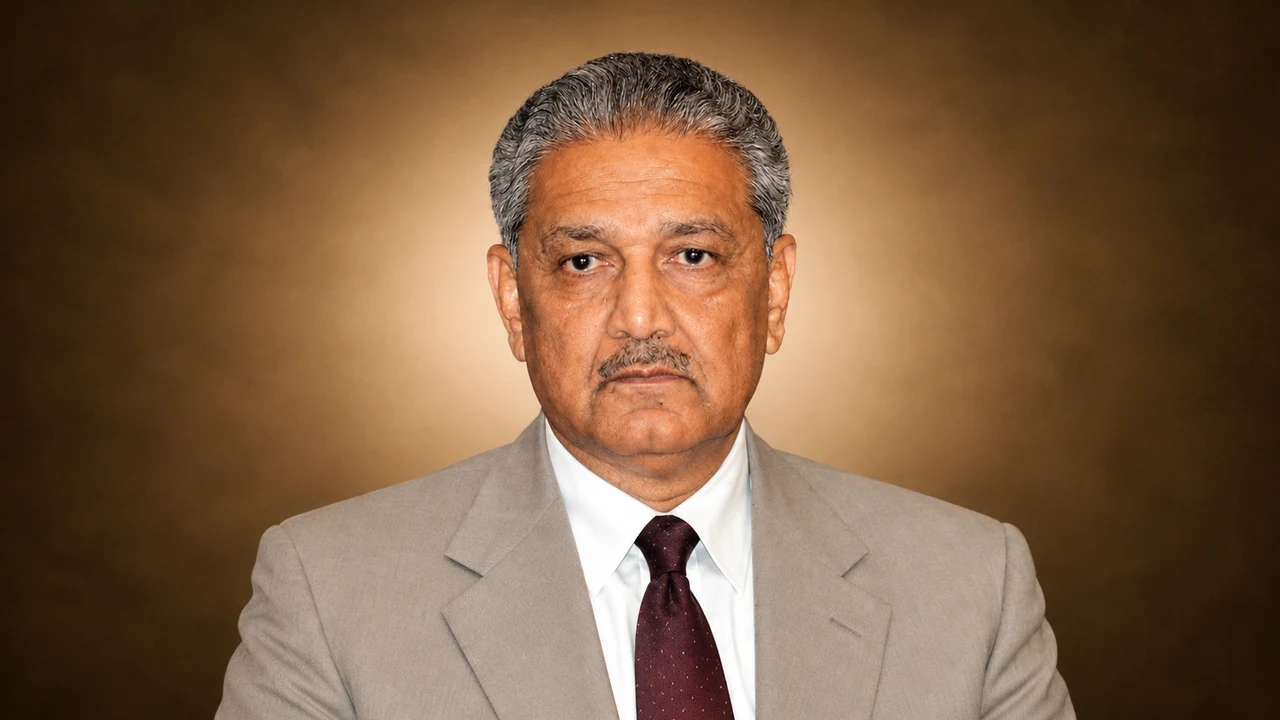
Dr. Abdul Qadeer Khan (1 April 1936 – 10 October 2021) was a Pakistani metallurgical engineer and nuclear scientist who played a central role in developing Pakistan's uranium-enrichment programme. Born in Bhopal, then part of British India, he migrated to Pakistan with his family in 1952 and later pursued higher education in Europe. He established the Engineering Research Laboratories at Kahuta in 1976, an institution that later became known as Khan Research Laboratories (KRL). His scientific and organizational contributions became closely associated with Pakistan's nuclear history. His legacy also remains internationally debated because of his involvement in the unauthorized transfer of sensitive nuclear technology to other countries.
SCIENTIFIC PAKISTANI | THE LEADERSHIP ARCHIVES
The Nuclear Scientist: How Abdul Qadeer Khan Shaped Pakistan's Nuclear Programme
A Historical Profile of the Scientist Behind Pakistan's Uranium-Enrichment Effort (1936–2021)
The Scientific Contribution: Advancing Uranium Enrichment in Pakistan
The development of nuclear technology requires advanced scientific knowledge, highly specialized engineering and institutions capable of supporting complex research. In Pakistan, Dr. Abdul Qadeer Khan became a central figure in establishing the country's uranium-enrichment capability.
After completing his education in metallurgy and materials science, Khan worked in the Netherlands at a laboratory connected to the European uranium-enrichment industry. His professional experience gave him knowledge of gas-centrifuge technology, which became central to Pakistan's enrichment programme.
The Technical Foundation: Uranium enrichment is a process that increases the proportion of the uranium-235 isotope. Khan's expertise in metallurgy and centrifuge-related engineering contributed to Pakistan's efforts to develop this capability domestically.
The Return to Pakistan: Following India's 1974 nuclear test, Khan contacted Pakistan's leadership and offered his assistance. He returned to Pakistan in 1975 and became involved in the country's nuclear development effort.
The National Programme: In 1976, he established the Engineering Research Laboratories at Kahuta. The facility became a major centre for uranium-enrichment research and was renamed Khan Research Laboratories in 1981.
Building a Scientific Institution: Khan Research Laboratories
One of Dr. Khan's most significant contributions was the establishment and development of a dedicated research institution at Kahuta, near Islamabad.
Initially known as the Engineering Research Laboratories, the facility was created to support Pakistan's uranium-enrichment programme. Under Khan's leadership, it developed into a major scientific and engineering organization.
Research and Development: KRL focused on metallurgy, materials science, engineering and nuclear-related research. Its work also extended into other areas of advanced engineering and technology.
Institutional Leadership: Khan served as project director of the laboratories from 1976 to 1998 and later became their chairman. His role involved building research capacity, organizing technical teams and developing a specialized scientific workforce.
Beyond Nuclear Research: The institution also became associated with Pakistan's guided-missile development efforts. Khan served as chief coordinator for the guided-missile programme during the 1990s.
A Turning Point in Pakistan's History: The 1998 Nuclear Tests
Pakistan's nuclear programme reached a major turning point in May 1998, when the country conducted nuclear tests in response to India's nuclear tests earlier that month.
The tests, carried out at Chagai in Balochistan on 28 and 30 May, established Pakistan as a declared nuclear-armed state. Khan's work on uranium enrichment and his leadership at Kahuta were important parts of the country's broader nuclear development effort.
National Recognition: In Pakistan, Khan became widely known as Mohsin-e-Pakistan for his contribution to the country's nuclear programme. His name became closely linked with the scientific and strategic developments that shaped Pakistan's security policy.
A Wider Scientific Team: Pakistan's nuclear programme was not the achievement of one individual. It involved scientists, engineers, military personnel, government institutions and many other contributors. Khan's role was particularly associated with the uranium-enrichment side of the programme.
International Controversy: Nuclear Proliferation and Accountability
Dr. Khan's legacy also includes one of the most significant nuclear-proliferation controversies of the modern era.
In the early 2000s, investigations revealed that a network associated with Khan had transferred sensitive nuclear technology and expertise to other countries, including Iran, Libya and North Korea. These activities raised serious international concerns about the spread of nuclear weapons capabilities.
In February 2004, Khan appeared on Pakistani television and accepted responsibility for the proliferation activities. President Pervez Musharraf subsequently granted him a pardon, although he remained under house arrest for several years. A Pakistani court ended his house arrest in 2009.
The full extent of the network's activities and the roles of other individuals and institutions have remained subjects of international investigation and debate. His history therefore includes both his central role in Pakistan's nuclear development and the serious consequences of nuclear technology proliferation.
Global Recognition: Awards and Achievements
Dr. Abdul Qadeer Khan received several national honours for his scientific and institutional contributions.
Some of his major recognitions include:
- Hilal-i-Imtiaz: One of Pakistan's prestigious civil awards, which he received for his services.
- Nishan-i-Imtiaz: Pakistan's highest civilian award, which he received twice, according to the Pakistan Academy of Sciences.
- Mohsin-e-Pakistan: An honorary title widely associated with his contribution to the country's nuclear programme.
- Pakistan Academy of Sciences: He served as its president from 1997 to 2002 and was a fellow of the academy.
- GIK Institute: He played an important role in the development of the Ghulam Ishaq Khan Institute of Engineering Sciences and Technology, serving as its project director.
Scientific Research and Academic Contributions
Dr. Khan's academic background was rooted in metallurgy, physical metallurgy and materials science. His doctoral research at the Catholic University of Leuven in Belgium focused on the properties and behaviour of metallic alloys.
His scientific interests and professional work included:
- Metallurgy and Materials Science: Research into the structure, strength and properties of metals and advanced alloys.
- Uranium-Enrichment Technology: Contributions to the development of Pakistan's gas-centrifuge enrichment capability.
- Engineering Research: Development of specialized engineering facilities and technical expertise at Kahuta.
- Scientific Institution Building: Support for research infrastructure and the training of engineers and scientists in Pakistan.
Unlike some prominent scientists who published widely read popular science books, Khan's best-known legacy is primarily associated with technical research, nuclear programme development and scientific institution-building.
A Message to the Youth: Building Knowledge Through Education
Dr. Abdul Qadeer Khan's life demonstrates how education, technical expertise and scientific institutions can influence a country's technological development. From his early education in Karachi to advanced studies in Europe and his leadership at Kahuta, his career reflected the importance of specialized knowledge and long-term research.
For students in Faisalabad, Lahore, Karachi, Peshawar and across Pakistan, his educational journey offers an important reminder: scientific progress requires strong foundations in mathematics, physics, chemistry, engineering and research.
However, scientific achievement also carries responsibility. Knowledge in powerful fields such as nuclear technology must be handled with transparency, accountability and an understanding of its international consequences.
Pakistan's future scientists can contribute to new developments in nuclear energy, medicine, artificial intelligence, space technology and advanced materials by combining technical excellence with responsible research.
Dr. Abdul Qadeer Khan's place in history is connected to a defining chapter of Pakistan's scientific development. His story offers lessons not only about ambition and institution-building, but also about the responsibility that comes with scientific knowledge.