US Troops Injured, Drone Destroyed in Iranian Strike on Kuwait Base
Published On 30 May, 2026
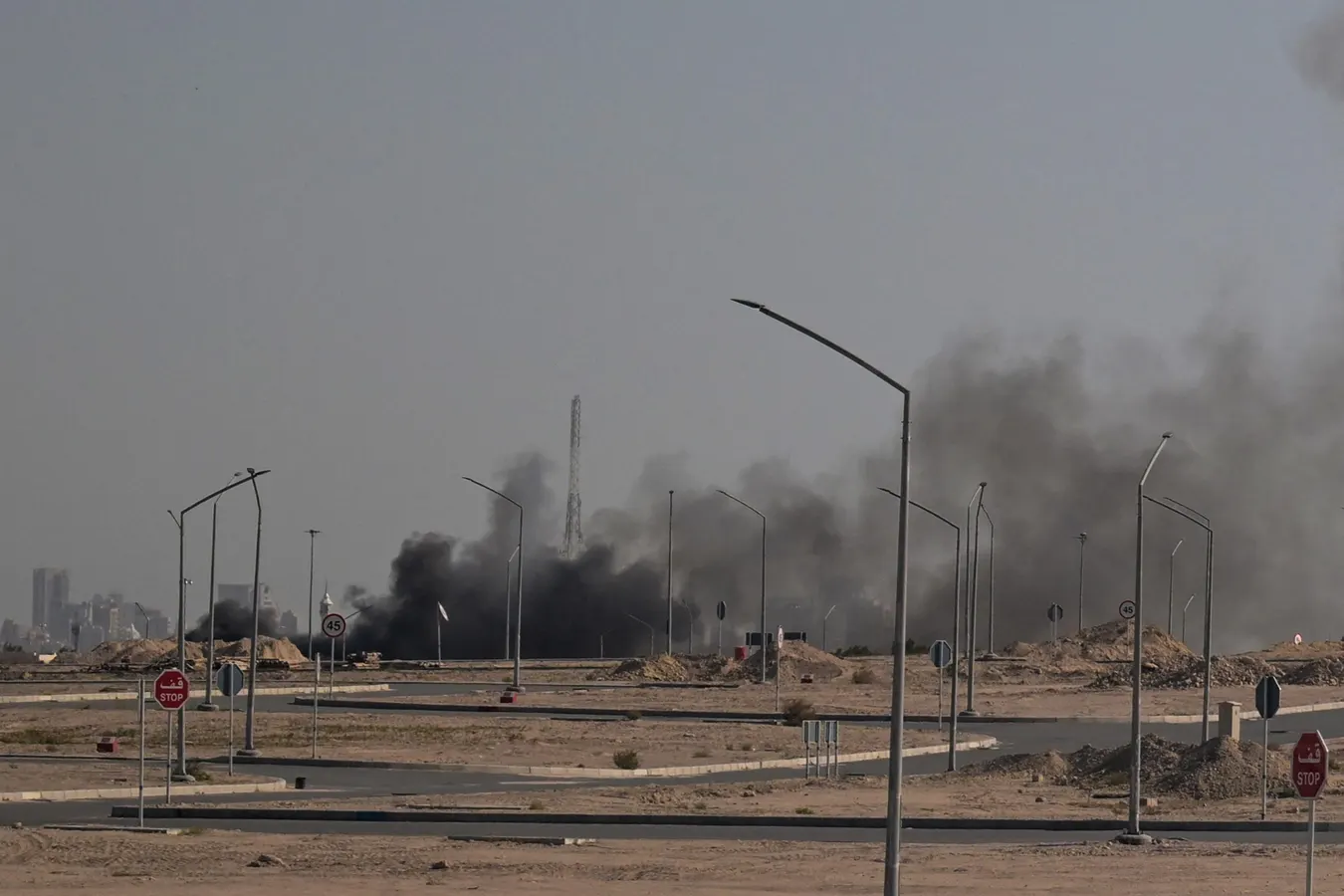
The missile was intercepted by Kuwaiti air defences, but falling debris struck the US-operated Ali Al Salem Air Base, causing minor injuries and serious damage to American military equipment.
According to Bloomberg, Iran fired a Fateh-110 ballistic missile toward Ali Al Salem Air Base in Kuwait. Kuwaiti air defences intercepted the missile, but debris from the projectile fell on the base and damaged the flight line.
The strike reportedly injured around five people, including active-duty US military personnel and contractors.
MQ-9 Reaper drones damaged
The attack caused severe damage to two US MQ-9 Reaper drones, each valued at about $30 million. One Reaper drone was completely destroyed, while at least one other was seriously damaged.
The human injuries were described as minor, but the material losses were significant.
The development followed a statement by US Central Command on maritime activity in waters near southern Iran earlier that morning.
Also Read: Kuwait air defences activated over missile, drone attacks
CENTCOM said Iran had launched a missile strike against Kuwait and described the attack as a “gross” and “egregious” violation of the ceasefire. US Central Command did not immediately respond to requests for comment cited in reports.
Iran says strike was retaliation
Iran’s Islamic Revolutionary Guard Corps issued a counter-statement, saying it had targeted the US air base after identifying it as the launch point for an earlier American attack.
According to the IRGC, the US military had carried out an early-morning strike using aerial projectiles against a location near Bandar Abbas airport. Iran said the missile strike was a “serious warning” to the enemy and declared that no aggression would go unanswered.
The IRGC warned that any future provocation would face a more decisive response and said responsibility for the consequences would rest entirely with the aggressor.
US and Iran trade blame over ceasefire
US officials said their earlier actions near the Strait of Hormuz were defensive.
CENTCOM said US forces had shot down five Iranian one-way attack drones that posed a threat near the Strait of Hormuz and struck an Iranian ground control station in Bandar Abbas that was preparing to launch a sixth drone.
Washington described those actions as “measured, purely defensive, and intended to maintain the ceasefire.”
Iran, however, condemned the Bandar Abbas strike as a ceasefire violation and framed its missile attack on Kuwait as lawful retaliation.
Also Read: Centcom says Iran missile toward Kuwait intercepted
Kuwait strongly condemned the missile and drone attacks, calling them a dangerous escalation and a flagrant violation of its sovereignty and security.
In a statement carried by Kuwait’s state news agency KUNA, the Foreign Ministry held Iran fully responsible and said Kuwait reserved the right to take all necessary measures to preserve its security and defend its territory.
Kuwaiti authorities demanded that Tehran immediately and unconditionally halt what they called aggressive attacks.
Strike comes during ceasefire talks
The attack took place as US and Iranian negotiators were working toward a deal to formally extend a fragile ceasefire. The ceasefire has been in place since April, though both sides have carried out attacks during that period.
Reports said the strike occurred as President Donald Trump was considering a deal to extend the truce for another 60 days, with renewed talks expected on the future of Iran’s nuclear programme.
Trump posted on social media on May 29 that he was ready to make a “final determination” on a preliminary agreement.
A White House official said Trump later held a roughly two-hour meeting in the Situation Room, but no announcement was made afterward.
The lack of a decision underscored the uncertainty surrounding efforts to preserve the ceasefire.
War has strained US stockpiles
Reports said Iran has fired more than 1,850 ballistic missiles at regional targets since launching its missile and drone campaign on February 28.
The Fateh-110 missile carries a 500-kilogram warhead and is classified as a short-range ballistic missile, according to the Center for Strategic and International Studies.
The wider campaign has also affected Washington’s own arsenal, drawing down stocks of JASSM-ER and Tomahawk cruise missiles, along with air-defence interceptors including THAAD, Patriot PAC-3 and SM-3 Block IIA.
Also Read: US ready to restart Iran strikes if talks fail: Hegseth warns
The latest Department of Defense casualty report for Operation Epic Fury, the Pentagon’s designation for the Iran campaign, lists 14 American deaths and 409 injuries to date.
The competing claims from Washington and Tehran show how strained the ceasefire has become. While diplomats continue efforts to secure a formal agreement, both sides have accused each other of violating the truce and continued military actions in the region.
The latest strike in Kuwait has added another layer of pressure to already tense negotiations between the United States and Iran.