


How is Ramadan Celebrated in Different Countries?
Published On 15 Feb, 2021

Ramadan is much more than a fasting period: it is a holy month rooted in culture, faith and history. Across the globe, Muslims mark this time with vibrant celebrations that are unique to their region and passed on through generations.
The holy month is marked with shared traditions such as fasting, charity and prayer, as well as practices that vary from culture to culture, from bathing rituals in Indonesia to lantern-lighting in Egypt. Here, Culture Trip contributors discuss how Ramadan is celebrated in countries around the world.
Cannons fire for iftar in Lebanon

In many countries across the Middle East, cannons are fired daily during the month of Ramadan to signal the end of the day’s fast. This tradition, known as midfa al iftar, is said to have begun in Egypt over 200 years ago, when the country was governed by Ottoman ruler Khosh Qadam. While testing a new cannon at sunset, Qadam accidentally fired it, and the sound that reverberated throughout Cairo prompted many civilians to assume that this was a new way to signal the end of the fast. Many thanked him for his innovation, and his daughter, Haja Fatma, urged him to make this a tradition.
The practice made its way to many countries across the Middle East including Lebanon, where cannons were used by the Ottomans to mark iftarall over the country. The tradition was feared lost in 1983 after an invasion that led to the confiscation of some of the cannons – then considered weapons. But it was revived by the Lebanese Army following the war and continues even today, evoking nostalgia among older generations who can remember the Ramadans of their childhood.
Morocco’s town criers perform prayers at dawn

During Ramadan, Morocco’s neighbourhoods are roamed by the nafar – a town crier who, donning the traditional attire of a gandora, slippers and a hat, marks the start of dawn with his melody. Selected by the townspeople for his honesty and empathy, the nafar walks down the street while blowing a horn to wake them up for suhoor.
This tradition, which spread across the Middle East to Morocco, dates back to the seventh century, when a companion of the Prophet Muhammad would roam the streets at dawn singing melodious prayers. When the nafar’s music sweeps through the town, it is met with gratitude and thanks, and he is officially compensated by the community on the last night of Ramadan.
Egyptians light colourful lanterns during Ramadan

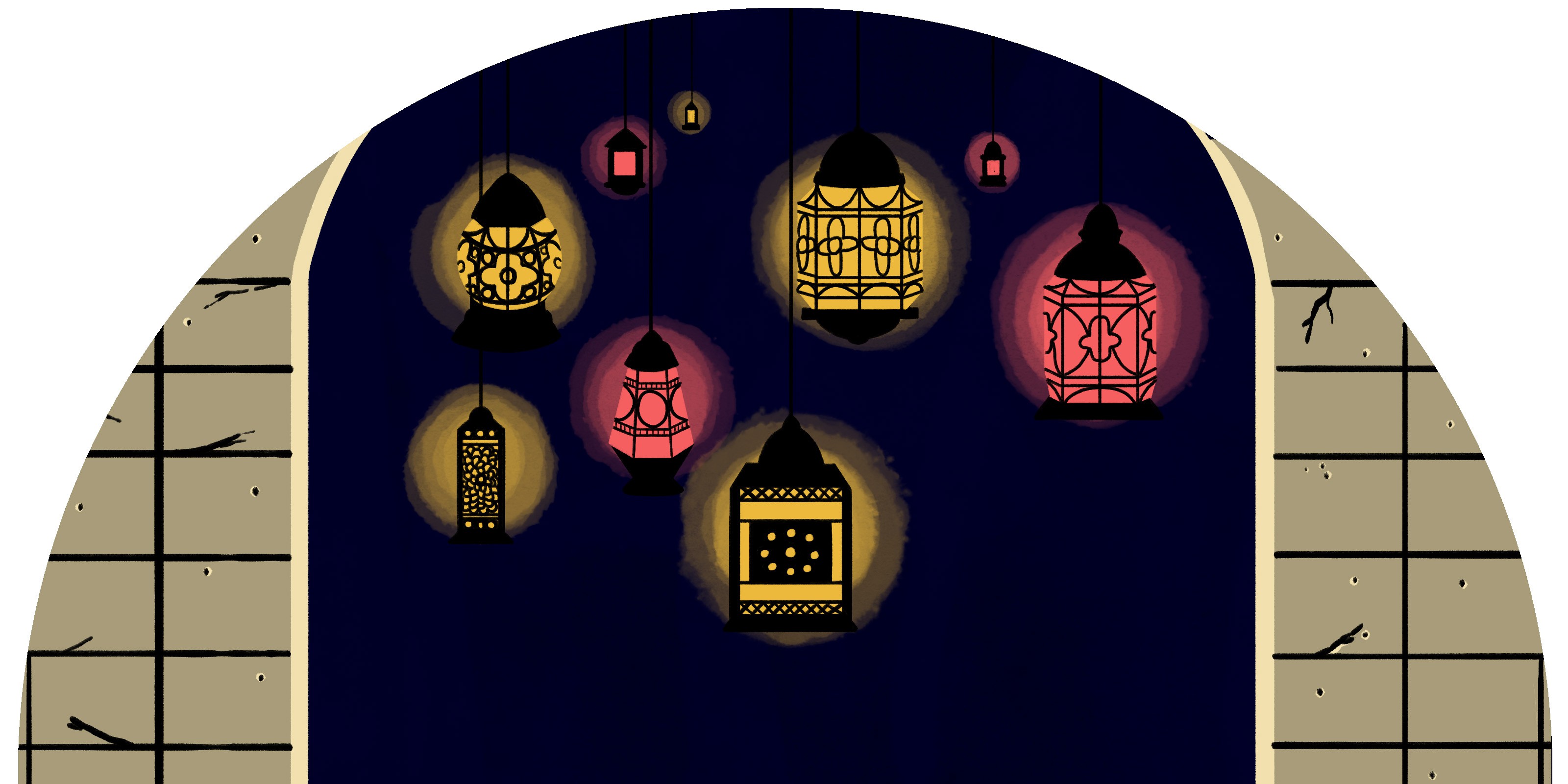
Every year, the people of Egypt welcome Ramadan with colourful fanous – intricate lanterns that symbolise unity and joy throughout the holy month. Although this tradition is more cultural than it is religious, it has come to be strongly associated with the holy month of Ramadan, taking on a spiritual significance.
The tales of its origin differ, but a prominent account dates the birth of the fanous to one night during the Fatimid dynasty, when Egyptians greeted Caliphate Al-Muʿizz li-Dīn Allah as he arrived in Cairo on the first day of Ramadan. In order to provide an illuminated entrance for the imam, military officials ordered locals to hold candles in the dark streets, sheltering them in wooden frames to prevent them from blowing out. Over time, these wooden structures emerged into patterned lanterns, and are now displayed across the entire country, spreading light during the holy month.
Today, the fanous are often integrated into other local traditions. For example, during the holy month, children walk the streets with their lanterns, singing merrily while asking for gifts and sweets.