
National Assembly Passes NAFSA Bill 2025 to Improve Food Safety & Agricultural Trade in Pakistan
Published On 12 May, 2026
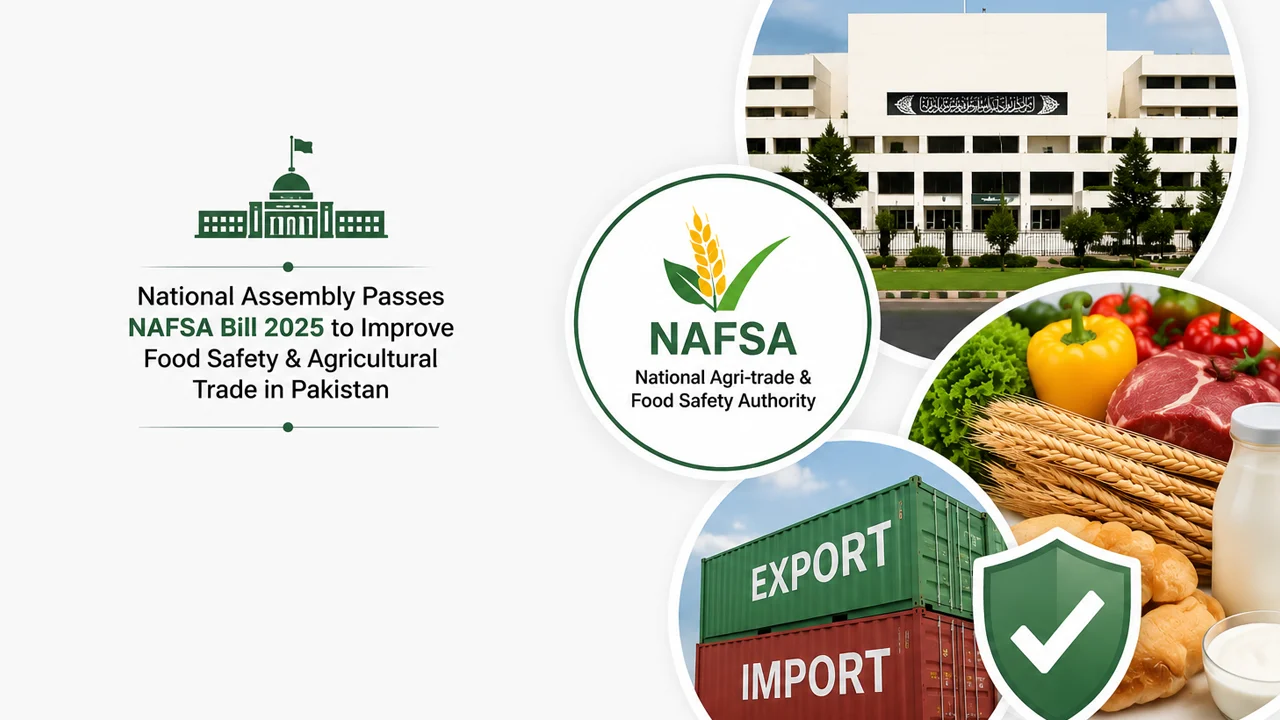
Simple News Explanation
Pakistan’s National Assembly has passed the National Agri-trade and Food Safety Authority (NAFSA) Act 2025 to improve food safety, agricultural exports, imports, and international trade standards in the country.
The new law creates a central authority called NAFSA that will regulate food safety, sanitary and phytosanitary (SPS) measures, pesticides, animal health, plant health, and agricultural trade across Pakistan.
The government says the law was needed to help Pakistan meet international food safety requirements, improve export quality, and protect human, animal, and plant health.
What Changed in the Law?
• New National Food Safety Authority Created
The law establishes the National Agri-trade and Food Safety Authority (NAFSA) headquartered in Islamabad.
The authority will regulate:
- Agricultural products
- Food imports and exports
- Animal and plant health
- Pesticides and agrochemicals
- Food safety standards
- SPS compliance for international trade
The government says a single authority was needed to better coordinate food safety and trade regulations nationwide.
• Strict SPS (Sanitary & Phytosanitary) Rules Introduced
The law requires imported and exported goods to comply with international SPS standards.
These rules are designed to:
- Prevent spread of diseases
- Control harmful organisms and pests
- Ensure safe food for humans and animals
- Protect plant health
- Meet global trade requirements
Pakistan will now follow standards linked to international organizations such as:
- Codex Alimentarius
- World Organization for Animal Health (WOAH)
- International Plant Protection Convention (IPPC)
• Mandatory Registration for Business Operators
Businesses involved in food, agriculture, livestock, pesticides, imports, or exports may now need registration with NAFSA.
The authority can:
- Issue licenses and certificates
- Monitor compliance
- Inspect facilities
- Cancel registrations for violations
This change aims to improve accountability and product quality in the market.
• Stronger Import & Export Controls
The law gives NAFSA powers to regulate or ban imports and exports that may pose risks to health or agriculture.
Imported goods must now carry proper SPS certificates from exporting countries.
The law also bans transit of:
- Unregulated GMOs
- Banned pesticides
- Unlicensed seeds and food items
The government says these measures are needed to stop harmful or unsafe products from entering Pakistan.
• Inspection & Quarantine Powers Expanded
Authorized officers will now have powers to:
- Inspect factories and warehouses
- Check imported/exported goods
- Take product samples
- Conduct quarantine checks
- Seize unsafe goods
- Order destruction of harmful products
Authorities can also stop vehicles, vessels, aircraft, and containers carrying suspicious goods.
This was introduced to strengthen border checks and improve food safety enforcement.
• Heavy Penalties for Violations
The law introduces strict punishments for offenses such as:
- Importing banned or unsafe products
- Selling fake or adulterated pesticides
- Using forged certificates
- Violating quarantine rules
- Smuggling undeclared goods
Penalties may include:
- Imprisonment up to 3 years
- Fines up to Rs3 million
- Additional daily fines for continued violations
The government says strict penalties are necessary to protect public health and maintain export credibility.
• Scientific & Advisory Committees Established
The law creates:
- A Scientific Committee
- Advisory Committees
- Complaint Resolution Committee
- Appellate Committee
These bodies will help with:
- Technical guidance
- Food safety policies
- Scientific advice
- Industry coordination
- Dispute resolution
This aims to improve transparency and expert-based decision-making.
• Coordination with Provinces
NAFSA will coordinate with provincial governments on:
- Food safety standards
- Pesticide regulation
- SPS enforcement
- Animal and plant health measures
The goal is to create uniform food safety standards across Pakistan.
Why This Law Was Needed
According to the bill:
- Pakistan needs better food safety systems
- International markets require SPS compliance
- Unsafe food and pesticides can harm public health
- Export industries need stronger global credibility
- Better coordination is needed between provinces and the federal government
The government says the law will:
- Improve agricultural exports
- Protect consumers
- Strengthen quarantine systems
- Reduce unsafe imports
- Improve international market access for Pakistani products
Short Summary
✅ NAFSA authority established for food safety & trade
✅ Strict SPS standards introduced
✅ Stronger import/export inspections
✅ Registration required for business operators
✅ Heavy penalties for fake or unsafe products
✅ Better quarantine & border controls
✅ Coordination with provinces improved
✅ Aims to boost exports and protect public health