



HEALTH: WHY NEW VIRUSES CONTINUE TO SPREAD
Published On 15 Feb, 2021
The coronavirus pandemic has, by the time of this writing, reached the shores of all continents but Antarctica, and the number of infections is likely to grow exponentially in the coming days.
Over the past few weeks, we’ve seen some of the world’s most developed economies failing to combat the spread of the virus. The New York Times estimates that the number of infected people in the US could exceed 160 million over the course of the epidemic. The contagion is predicted to hit countries with weaker health systems even more strongly, with Pakistan predicted to have over 70,000 infected people by the middle of April if the government doesn’t undertake a coordinated intervention.
One would expect, in such dreadful times, that the governments around the world would take coordinated and drastic measures to combat the spread of the virus. But the response from the ruling elite, barring a few world leaders, has been chilling. German Chancellor Angela Merkel warned the virus could infect 60 to 70 percent of the German population and British Prime Minister Boris Johnson, who himself tested positive last week, declared that “many more families are going to lose loved ones before their time.” US President Donald Trump has advised infected Americans to continue going to work, ‘affirming’ that the virus will disappear like a miracle.

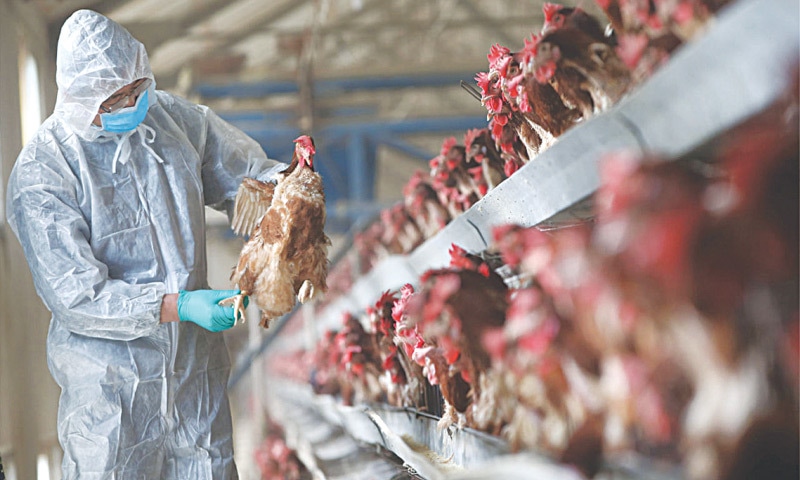
The problem, fundamentally, lies in the nature and scale of industrial farming operations. Thousands of genetically identical poultry or hogs are stacked together in mega-confinements before being slaughtered, processed and transported around the world. Because these animals are not genetically diverse, they offer no immune firebreak to slow transmission when they become infected, argues Rob Wallace, an evolutionary biologist, in his book Big Farms Make Big Flu. Moreover, because such animals live in contained animal feeding operations, they’re highly likely to suffer from immune depression.
Beside facilitating the development and transmission of dangerous variants of viruses in under cramped and unsanitary conditions at factory farms, agribusiness has been at the forefront of generating new viral diseases. Ebola is the most recent and alarming example here.