Artemis mission unveils stunning ‘Earthset’ view from lunar surface
Published On 22 Apr, 2026
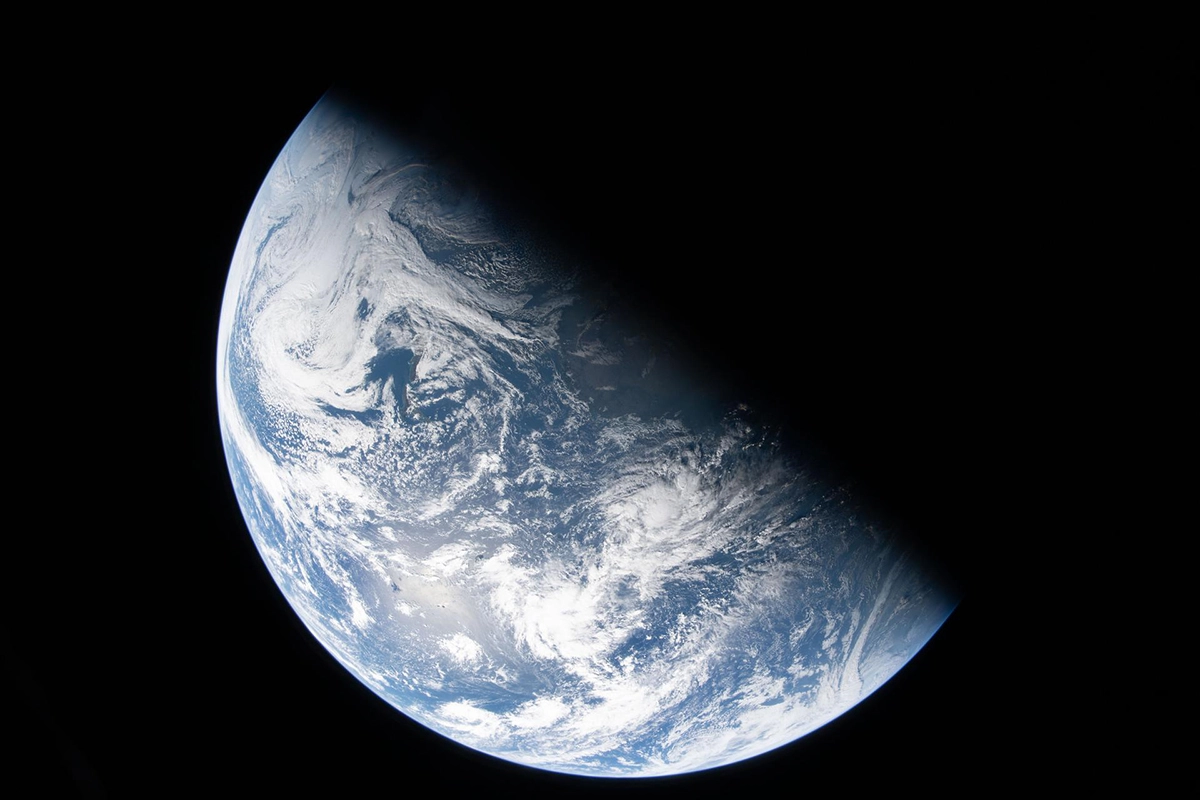
According to foreign media, 58 years ago Apollo 8 astronauts captured the first historic image of Earth from lunar orbit, known as “Earthrise”. The new image is described as more than a striking view, and is being regarded as a quiet record of major changes taking place on the planet.
Apollo 8 commander Frank Borman observed the barren far side of the Moon, marked by craters and a colourless surface. On completing the spacecraft’s fourth orbit, the crew witnessed the Earth rising over the lunar horizon, an image captured by Bill Anders.
The photograph became one of the most significant images in human history and strengthened the environmental movement, contributing to the establishment of Earth Day.
Nearly 58 years on, the Artemis II crew has recorded a similar view. Scientists are using it to compare the health of the Earth across decades.
The Artemis programme’s astronauts captured a new “Earthset” image from close to the Moon, taken in April 2026 from the Orion spacecraft. It again draws attention to the fragility of the planet. Carbon dioxide levels have risen by around one third over recent decades, while global temperatures have increased by at least 1°C.
Earth scientists reported that the notable changes in polar regions, particularly in Antarctica, where ice shelves spanning thousands of kilometres have broken apart. Ice is melting more rapidly worldwide, and snowfall seasons are shortening.
The Earth’s surface has also altered, with forests shrinking, cities expanding, and lakes such as the Aral Sea reduced to less than 10 per cent of their original size.
Although thousands of satellites now monitor the planet, experts maintain that images taken by human astronauts carry an emotional and perceptive quality that machines cannot replicate.
Craig Donlon of the European Space Agency said human-captured images include feeling and perspective that leave a deeper impact on viewers. Frank Borman’s words are still considered relevant, that travelling to the Moon ultimately brings greater focus on Earth, as it remains the only home.
Petra Heil of the British Antarctic Survey stated that nearly 95 per cent of changes on Earth are directly linked to human activity. However, the comparison is not intended solely to highlight decline.
Experts suggest that just as the 1968 image inspired environmental awareness, the 2026 view may encourage present generations to take serious action on climate change.
From space, the Earth still appears beautiful, though its fragility is now greater than before.