


Dr Abdus Salam
Published On 02 Jun, 2026
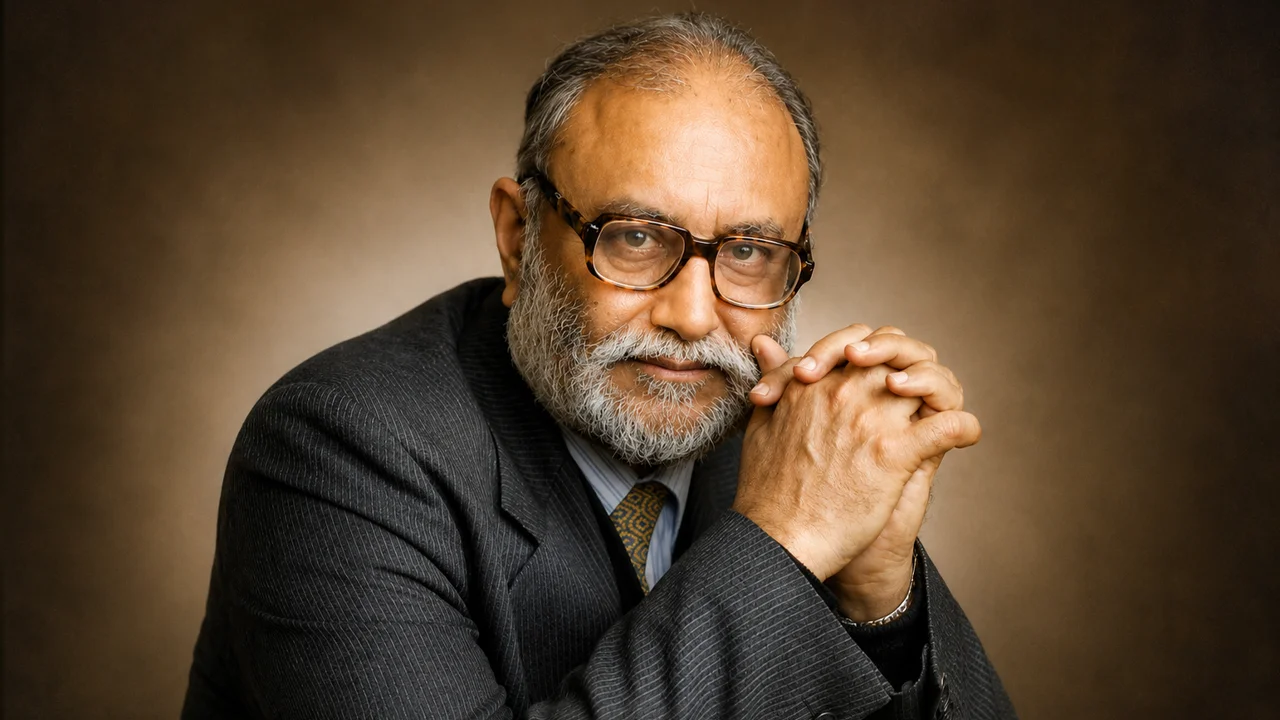
Dr. Abdus Salam was a Pakistani theoretical physicist, born on 29 January 1926 in Jhang, Punjab.
He won the Nobel Prize in Physics in 1979 for his contribution to electroweak unification theory.
He remains one of Pakistan’s greatest scientists and founded ICTP to support scientific research in developing countries.
SCIENTIFIC PAKISTANI | THE LEADERSHIP ARCHIVES
The Grand Unification: How Abdus Salam Rewrote the Laws of Nature
A Centennial Tribute to Pakistan’s First Nobel Laureate (1926–2026)
The Scientific Breakthrough: Merging the Forces
At the heart of modern physics lies a profound quest to simplify the perceived complexity of the universe into a single set of elegant rules. For centuries, the forces of nature seemed disjointed and chaotic. Before the interventions of Dr. Abdus Salam, the four fundamental forces—Gravity, Electromagnetism, the Strong Nuclear Force, and the Weak Nuclear Force—were treated as entirely separate mathematical entities with no common language.
Dr. Salam’s "High Impact" contribution was the masterstroke of Electroweak Unification. He posited that at the extreme energy levels present during the birth of the universe, the electromagnetic force (which governs light and electricity) and the weak nuclear force (which governs radioactive decay) were actually two facets of the same phenomenon. This was not merely a philosophical suggestion; it was a rigorous mathematical proof that provided the cornerstone for the Standard Model of Particle Physics, the most accurate map of the subatomic world ever created by humankind.
The Theory: Salam utilized the sophisticated framework of gauge symmetry, specifically the SU(2)×U(1) symmetry group, to show how these forces blend.
The Prediction: His equations demanded the existence of previously unknown "messenger" particles. He predicted the existence of W and Z bosons, massive particles that carry the weak force.
The Validation: In a triumphant moment for theoretical physics, these particles were experimentally discovered at CERN in 1983. This validation confirmed that Salam had successfully deciphered a chapter of the universe’s "source code," leading to the eventual discovery of the Higgs Boson decades later.
Building a "Scientific Sanctuary": The ICTP
In 1964, Dr. Salam’s vision transcended pure mathematics to address a global inequality in knowledge. He founded the International Centre for Theoretical Physics (ICTP) in Trieste, Italy. He famously described the center as a "scientific sanctuary"—a place where researchers from developing nations could sharpen their minds without being isolated from the global scientific community.
Salam believed that "scientific hunger" was as debilitating as physical hunger. He recognized the "brain drain" affecting Pakistan and neighboring nations, where the brightest minds were forced to migrate to the West to find adequate facilities. To combat this, he created the Associateship Scheme. This allowed scientists to spend three months a year at elite global labs to conduct high-level research before returning to their home institutions to teach and lead. By 2026, the ICTP has trained over 150,000 scientists from across the globe, serving as a permanent beacon for intellectual equality and South-South collaboration.
Founding the Foundations: Impact on Pakistan
Dr. Salam was the primary architect of Pakistan’s modern scientific infrastructure. His contributions were not limited to the chalkboard; they were etched into the very soil of the nation through the establishment of institutions that remain the backbone of Pakistani R&D:
Space Exploration (SUPARCO): In 1961, Salam convinced the national leadership that space was the next frontier. He founded SUPARCO, making Pakistan the first South Asian country to establish a space program and launch a sounding rocket (Rehbar-I).
Nuclear Science & Energy: As the chief scientific advisor, he played a pivotal role in the Pakistan Atomic Energy Commission (PAEC). He was instrumental in establishing PINSTECH (Pakistan Institute of Nuclear Science and Technology), turning it into a world-class center for peaceful nuclear research and medical isotopes.
The Nathiagali Summer College: Recognizing that science thrives on dialogue, he established this annual international forum in 1976. For 50 years, it has brought Nobel laureates and the world's brightest minds to the mountains of Pakistan to engage with local faculty and students.
High-Impact Bibliography
For the serious researcher and the aspiring academic, these are the essential "Must-Reads" authored by Dr. Salam that shaped the 20th and 21st centuries:
"Weak and Electromagnetic Interactions" (1968): The seminal, Nobel-winning paper. It is a masterpiece of mathematical physics that describes the unification of forces.
"Ideals and Realities" (Book): A deeply personal and moving collection of essays. It explores the philosophy of science, the harmony between faith and inquiry, and the urgent necessity for scientific investment in the Global South.
"A Convergence of Fundamental Forces": His primary lecture series detailing the mathematical beauty of the universe. It remains a standard text for graduate-level particle physics.
A Message to the Youth: The Torchbearers of 2026
Dr. Salam often reminded the world that "Scientific thought is the common heritage of mankind." He was living proof that a young student from a modest home in Jhang—equipped with nothing more than a pen, paper, and an iron will—could stand on the world stage and explain to humanity how the universe works.
To the students reading Scientific Pakistani in Faisalabad, Lahore, Karachi, or Peshawar: The next revolution in Artificial Intelligence, Sustainable Energy, or Quantum Computing will not be restricted to the laboratories of the West. It is waiting to be discovered by you. Dr. Salam’s legacy is not just a history lesson; it is a blueprint for your future.
"The state of science in a country is determined by its attitude towards its scientists. We must create a culture where inquiry is celebrated and genius is nurtured. Become the scientists that the world cannot ignore."