
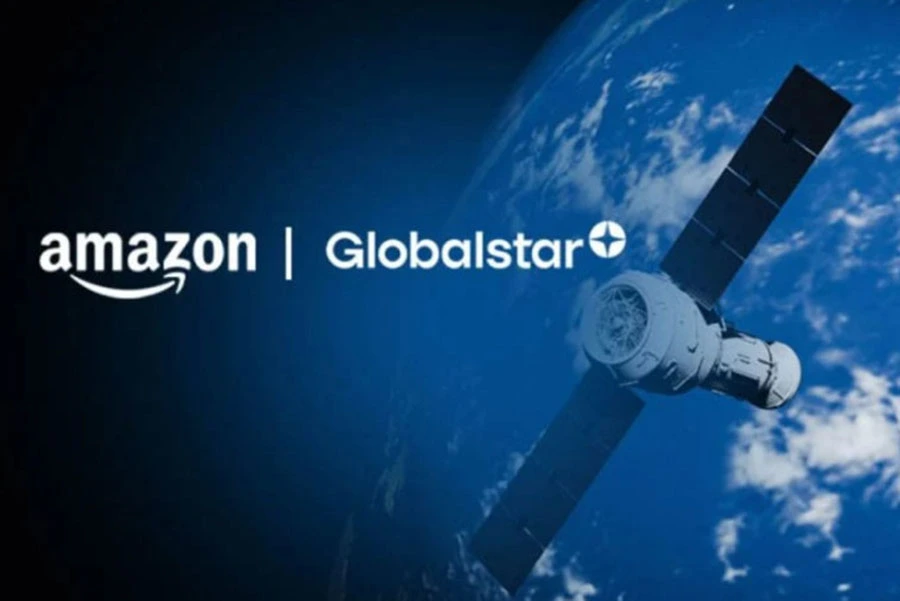
Amazon has announced plans to acquire Globalstar in an $11.57 billion deal, aiming to compete with Starlink.
Published On 15 Apr, 2026
The acquisition is part of Amazon’s broader strategy to compete with SpaceX’s Starlink network, which currently dominates the sector with a constellation of around 10,000 satellites and more than 9 million global users.
Through the deal, Amazon will add Globalstar’s existing fleet of about two dozen satellites to its own network of over 200 satellites. The company is also working to deploy nearly 3,200 satellites in low Earth orbit by 2029, with a significant portion required to meet regulatory deadlines by mid-2026. Amazon is expected to begin rolling out its satellite internet services later this year.
Globalstar specializes in direct-to-device (D2D) satellite connectivity, enabling mobile devices to connect directly to satellites without relying on traditional ground-based towers. This technology is particularly useful for emergency services and connectivity in remote areas. Amazon plans to integrate this capability into its network, with D2D services expected to launch by 2028.
The deal also maintains Globalstar’s existing partnership with Apple, which uses its satellite network to power features like Emergency SOS and Find My on iPhones and Apple Watches. Amazon confirmed it will continue supporting these services under a new agreement.
Apple had previously invested around $1.5 billion in Globalstar and holds a 20% stake in the company as part of efforts to expand satellite-based communication features.
Industry analysts view the acquisition as a significant move to close the gap with Starlink, which benefits from rapid satellite deployment and extensive launch capacity. The satellite communications sector is increasingly seeing consolidation as companies seek to compete with SpaceX’s scale.
Under the terms of the agreement, Globalstar shareholders can choose to receive $90 per share in cash or Amazon stock. The offer represents a premium of over 30% compared to the company’s share price before deal discussions became public.
The transaction is expected to close next year, subject to regulatory approvals, including clearance from the U.S. Federal Communications Commission.