

Dr. Pervez Hoodbhoy
Published On 19 Nov, 2026
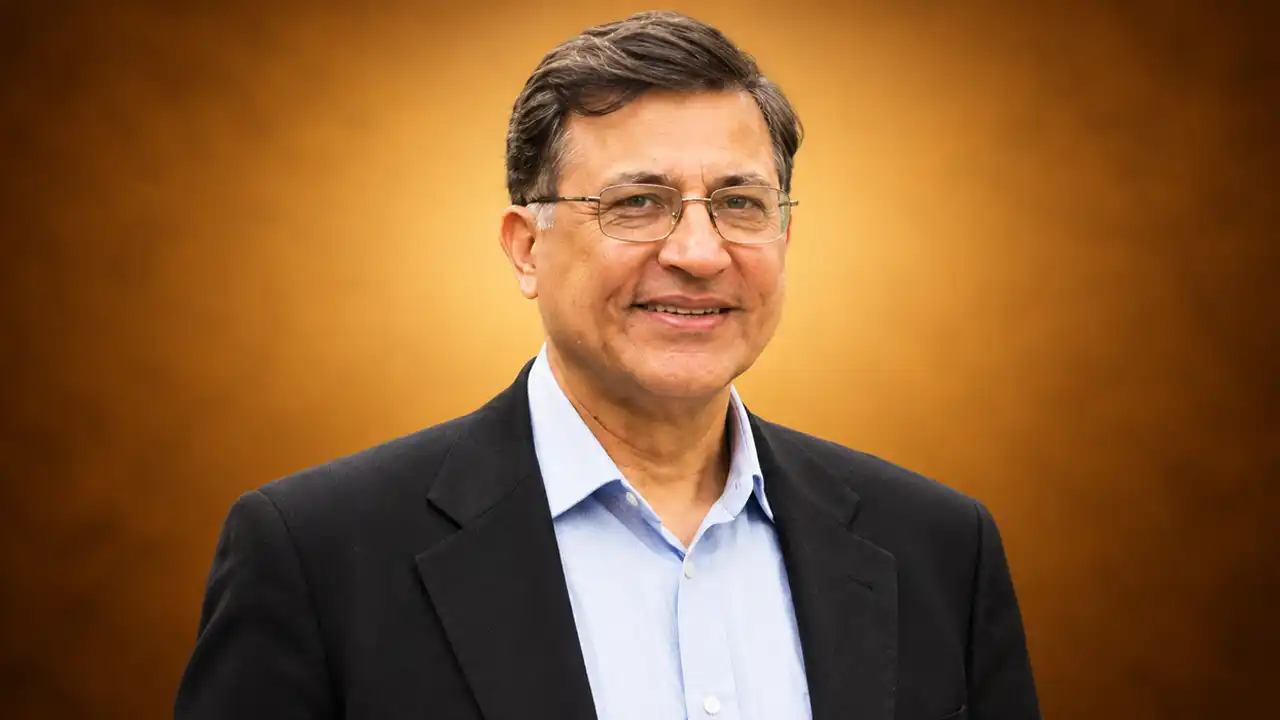
SCIENTIFIC PAKISTANI | THE LEADERSHIP ARCHIVES
Dr. Pervez Hoodbhoy: Exploring the Frontiers of Nuclear Physics and Defending the Power of Scientific Reason
Dr. Pervez Amirali Hoodbhoy is a distinguished Pakistani nuclear physicist, educator, author, and public intellectual whose research has contributed to the fields of nuclear physics, particle physics, and quantum chromodynamics. With advanced degrees from the Massachusetts Institute of Technology (MIT) and nearly five decades of teaching and research experience at Quaid-i-Azam University, he has become one of Pakistan's most recognised voices in science education, critical thinking, and nuclear disarmament.
Introduction: A Scientist Dedicated to Knowledge and Reason
Dr. Pervez Hoodbhoy belongs to a generation of Pakistani scientists who helped connect the country's academic institutions with international scientific research. His work in theoretical and experimental areas of physics, combined with his commitment to science education, has made him an influential figure in Pakistan's intellectual landscape.
Unlike scientists whose careers focus primarily on developing strategic weapons, Hoodbhoy is widely known for his criticism of nuclear arms races and his advocacy for nuclear disarmament. He has consistently argued that scientific knowledge should improve human understanding, support education, and contribute to peaceful development.
His career extends beyond university classrooms and research laboratories. Through books, documentaries, public lectures, and educational initiatives, he has worked to make complex scientific and social questions accessible to wider audiences.
Early Life and Academic Foundation
Born in Karachi, Pakistan, on July 11, 1950, Pervez Hoodbhoy developed an early interest in science, mathematics, electricity, and mechanical devices.
He attended Karachi Grammar School, where his academic abilities helped prepare him for higher education abroad.
In 1969, he joined the Massachusetts Institute of Technology in the United States. His interest in engineering and fundamental science led him to pursue several academic qualifications at the institution.
He completed:
-
Bachelor of Science in Mathematics in 1973.
-
Bachelor of Science in Electrical Engineering in 1973.
-
Master of Science in Solid State Physics in 1973.
-
PhD in Nuclear Physics in 1978.
His academic journey reflects an unusual combination of mathematical training, engineering knowledge, and advanced theoretical physics.
MIT and the Study of Nuclear Physics
Hoodbhoy's doctoral education at MIT established the foundation for his career in advanced physics research.
His research interests have included quantum chromodynamics, nuclear structure, particle interactions, spin phenomena, supersymmetry, and many-body theory.
These subjects explore some of the most fundamental questions about matter and the forces that govern the physical universe.
One important area of his research is quantum chromodynamics (QCD), the theory describing the strong interaction between quarks and gluons. These fundamental particles are the building blocks associated with protons and neutrons.
His academic interests also extend to particle phenomenology, which connects theoretical models in particle physics with the results of experiments and observations.
Through this research, Hoodbhoy has contributed to Pakistan's presence in international discussions about modern theoretical physics.
Scientific Contributions: Nuclear and Particle Physics
Dr. Hoodbhoy's scientific work covers several advanced areas of physics, particularly the relationship between fundamental particles, nuclear matter, and mathematical theories.
His major research interests include:
Quantum Chromodynamics: Studying the strong nuclear force and the interactions of quarks and gluons inside protons and neutrons.
Nuclear Physics: Exploring the structure and behaviour of atomic nuclei through mathematical and theoretical approaches.
Particle Phenomenology: Investigating how theoretical predictions relate to particle interactions and experimental evidence.
Spin Physics: Examining the role of particle spin in understanding the internal structure and behaviour of matter.
Supersymmetry: Studying theoretical frameworks that propose relationships between different classes of fundamental particles.
Many-Body Theory: Exploring the behaviour of systems containing large numbers of interacting particles.
His research interests also include conformal field theory, holography, topology, and quantum mechanics.
These subjects form part of the broader scientific effort to understand matter at its most fundamental level.
Quaid-i-Azam University: Educating Generations of Physicists
In 1973, Hoodbhoy returned to Pakistan and joined Quaid-i-Azam University (QAU), Islamabad, then known as Islamabad University.
He began his academic career as a lecturer and gradually advanced to senior teaching and research positions.
He spent nearly five decades at the university, teaching physics and contributing to the development of its academic and research environment. His work helped introduce generations of students to advanced concepts in nuclear and particle physics.
He also served in academic leadership roles, including chairman of the Department of Physics.
His long association with QAU made him an important figure in Pakistan's higher education system. Alongside his research, he encouraged students to question established ideas, examine scientific evidence, and develop independent thinking.
International Academic Engagement
Hoodbhoy's scientific career has included research visits, postdoctoral work, and academic appointments at several internationally recognised institutions.
His professional experience has included:
-
University of Washington
-
Carnegie Mellon University
-
Massachusetts Institute of Technology
-
University of Maryland
-
European Organization for Nuclear Research (CERN)
-
International Centre for Theoretical Physics (ICTP)
These academic connections provided opportunities to exchange scientific ideas and participate in international research discussions.
He also served as Distinguished Professor of Physics and Mathematics at Forman Christian College University in Lahore from 2012 to 2020, following his professorship at Lahore University of Management Sciences.
Since 2021, he has served as an Adjunct Professor of Physics at the University of New Brunswick in Canada.
Science Education: Making Complex Ideas Accessible
One of Hoodbhoy's most important contributions has been his commitment to popularising science.
He believes that scientific understanding should not remain limited to universities, laboratories, and specialist publications. Instead, scientific knowledge should be communicated in ways that encourage curiosity and critical thinking among ordinary people.
He has produced and presented television programmes explaining scientific concepts and examining problems in Pakistan's education system.
His educational work has covered subjects ranging from physics and mathematics to scientific reasoning and the relationship between science and society.
Through public lectures, articles, and media appearances, he has consistently encouraged evidence-based thinking and questioned educational practices that discourage intellectual independence.
Writing and Intellectual Contributions
Dr. Hoodbhoy has also established a significant presence as an author and public intellectual.
His best-known book, Islam and Science: Religious Orthodoxy and the Battle for Rationality, examines the historical relationship between scientific inquiry, religious thought, and intellectual freedom.
The book has been translated into several languages and has contributed to international discussions about science, education, and modern intellectual life.
Another major publication is Pakistan: Origins, Identity and Future, in which he examines the country's historical development, national identity, and social challenges.
His writings have appeared in Pakistani and international publications, addressing science, education, nuclear policy, human rights, and public affairs.
Mashal Books: Promoting Knowledge Through Urdu Literature
Hoodbhoy has also contributed to education and intellectual development through Mashal Books, a publishing initiative he has led since the late 1980s.
The organisation focuses on publishing Urdu translations of important works covering modern thought, philosophy, education, women's rights, human rights, and social development.
The initiative reflects his belief that access to knowledge should not depend on a person's ability to read English.
By making international ideas available in Urdu, Mashal Books has helped bring discussions about science, society, and human rights to a wider readership.
The Black Hole: Building a Space for Science and Culture
In 2022, Hoodbhoy founded The Black Hole in Islamabad, an educational and cultural space designed to bring people together through science, art, literature, and public discussion.
The initiative provides a platform for lectures, discussions, cultural activities, and educational events.
Its central idea is to encourage curiosity and create opportunities for people from different backgrounds to exchange ideas.
The project reflects Hoodbhoy's long-standing commitment to making scientific and intellectual activities more accessible beyond traditional academic institutions.
Nuclear Disarmament and Public Advocacy
An important dimension of Hoodbhoy's public career is his opposition to nuclear weapons and the dangers associated with nuclear competition.
As a nuclear physicist, he has written and spoken extensively about nuclear deterrence, regional security, arms control, and the humanitarian consequences of nuclear conflict.
He has argued that scientific achievements should not be judged only by their military applications but also by their contribution to peace, public welfare, and human progress.
His international engagement has included membership of the United Nations Secretary-General's Advisory Board on Disarmament Matters from 2013 to 2018.
He has also been associated with the Bulletin of the Atomic Scientists, an organisation that raises awareness about nuclear risks and other global threats.
His position on nuclear policy has made him a prominent participant in discussions about security and the future of South Asia.
Awards and International Recognition
Dr. Pervez Hoodbhoy has received several national and international honours for his scientific, academic, and educational contributions.
His major recognitions include:
-
Baker Award for Electronics (1968): Received during his early academic years at MIT.
-
Abdus Salam Prize for Mathematics (1984): Recognition of his contribution to mathematical and scientific work.
-
UNESCO Kalinga Prize (2003): Awarded for his efforts to popularise science and communicate scientific knowledge to the public.
-
Joseph A. Burton Forum Award (2010): Presented by the American Physical Society for contributions to public understanding of science and its relationship with society.
-
Jean Meyer Award (2010): Recognition from Tufts University.
-
Foreign Policy's 100 Leading Global Thinkers (2011): Included in the publication's influential thinkers list.
-
Honorary Doctorate from the University of British Columbia (2019): Recognition of his contributions to education and public intellectual life.
These honours reflect the international reach of his work as a scientist, educator, and advocate for scientific understanding.
A Message for the Next Generation of Pakistani Scientists
Dr. Pervez Hoodbhoy's career offers an important lesson for young people interested in science: genuine progress begins with curiosity and the courage to ask questions.
His academic journey demonstrates the value of mathematics, strong scientific foundations, independent thinking, and international research exposure.
For aspiring physicists, his work highlights the importance of understanding fundamental principles rather than simply memorising scientific information.
He has consistently encouraged Pakistan's educational institutions to develop thinkers, researchers, and innovators who can contribute to global knowledge.
His message is particularly relevant for young Pakistani students who want to pursue careers in physics, mathematics, engineering, and other scientific disciplines.
Conclusion: A Lifetime Dedicated to Science and Critical Thinking
Dr. Pervez Hoodbhoy's career represents a distinctive contribution to Pakistan's scientific and intellectual history. His research in nuclear and particle physics, decades of university teaching, international academic engagement, and commitment to public education have established him as a respected figure in scientific discussions.
Beyond his work in theoretical physics, his efforts to promote science literacy, publish educational material in Urdu, and encourage peaceful approaches to nuclear policy have extended his influence far beyond academic circles.
Through his research, teaching, writing, and public engagement, Hoodbhoy continues to advocate a society where knowledge, evidence, and intellectual freedom are valued.
His legacy is a reminder that the true strength of science lies not only in discovering how the universe works, but also in helping people think more clearly about the world around them.