Guava production in Larkana tumbles to an all-time low
By Muhammad YaseenPublished On 05 Jan 2023
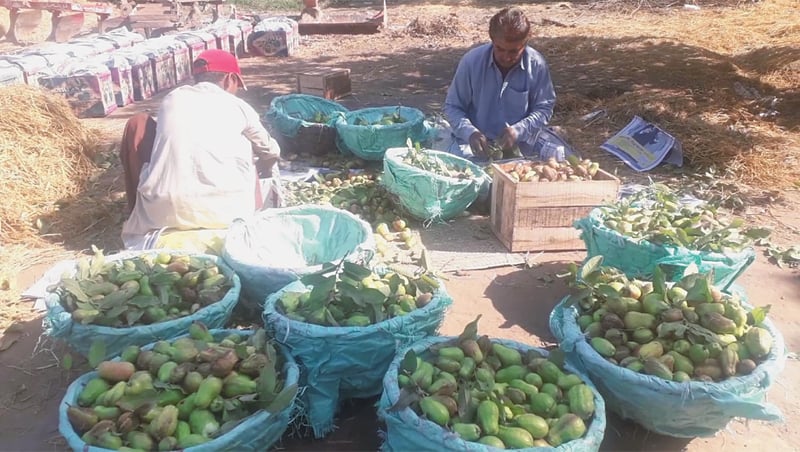
LARKANA: The guava production has tremendously been affected in the Larkana district, where orchards are spread over 30,000 acres of land.
Sindh Chamber of Agriculture (SCA) Larkana president Sirajul Oliya, confirming a drastic reduction in guava production this season, linked the damage to climate change paired with locust and mealybug attacks on the crop in the district.
Khalid Ahmed Memon, a contractor, said that 90 percent of guava crop over around 20,000 acres was affected but the SCA Larkana president estimates a 75 percent decline in the production.
Guava tree bears fruit twice a year. Its first season starts on October 15 and ends on April 15 while the second season begins on November 15 and ends on March 15. The farming community believes that 40 percent production between July and August normally goes waste due to harsh weather in the belt when trees are littered with the fruit.
Some farm owners say that the early arrival of hot weather had severely affected the fruit at the early stage. The fruit was damaged with matured flowers [ready to turn into fruit], they say. The late arrival of winter has also contributed to the low production, according to them.
The recent repeated locust attacks on guava orchards in Mahota, Akil, Again, Chuharpur, Naudero, and the adjacent areas had also caused heavy losses, says Sanalluah Bhutto, a holder of small patches of guava orchards.
Just imagine that guava in Larkana is currently selling at a rate of Rs100 per kilogram. Previously the fruit was selling at just Rs20 a kilo, says a farm owner, Rashdi. This trend indicates the state of the economy of guava growers and the manpower connected with guava orchards alone, he says.
The rate has gone up due to low production. The SCA Larkana chapter rejects the agriculture department’s claim that it was climate change alone that had caused a low yield, saying that framers and small landowners had waited for the early construction of around 12 sheds at the selected points in the province to biologically control the mealybug attacks. The project costing Rs98.4 million is still incomplete but the mealybug attack has already caused irreparable losses to different crops.
In this peak season until last year, around 150 truckloads of guava crates had regularly been dispatched to markets in Karachi, Multan, Rahim Yar Khan, Sadiqabad, Bahawalpur, Ahmedpur East, and other cities, growers say. But in the current season, hardly, seven to eight truckloads are transported to upcountry markets. This speaks volumes about the crop’s production, says Khalid Memon.
The labor engaged in plucking, collecting, packing and loading guava would be around 120,000 in the peak season but at present, there are hardly 10,000 to 20,000 at work. Orchard holders in Naudero and Bhuttos’ farms estimate a 90 percent reduction in guava production. They talk of a virus attack on the trees.
The guava fruit produced in Larkana and its adjoining areas has good taste but in contrast to it, the guava varieties imported from China, Malaysia, Thailand as well as the crop cultivated in Punjab do not match the taste, says Rashdi.
The varieties like Thadarami, Riyal, Sindhi, Seedless, Ramzan, Allahabadi, Benazir Indian and many more are usually cultivated in this belt and they carry good taste. The previous track record indicates that 30 truckloads of guava crates used to be transported for the Quetta market alone in this season. We hardly get Rs250 to Rs600 per crate in the market, growers say.
Most of the growers in Larkana, expressing their concern over the situation, say that they had already been suffering due to a drastic 50 percent low yield in rice crop and now 75 percent reduction in guava production will cast a severe impact on their economy. They want the Sindh government to declare Larkana a ‘drought-hit area’ and accelerate the pace of work on constructing biological control sheds so as to arrest the future losses and compensate the affected growers.
Recently, a State Bank team had visited the affected areas to assess the damage to paddy and guava crops, according to SCA and farmers.
Owners of guava orchards on the city’s outskirts say it was their maiden experience to have witnessed the drastic reduction in guava production.


